
What is Carte Use It Up?
Use It Up is how Carte treats a cooked component you already made as something the next meal can use — so a dish can become an ingredient, and shopping can focus on what is still missing.
Use It Up
Keep cooked components you already made available for later dishes — so dinner can build on dinner, and shopping can focus on what is still missing.
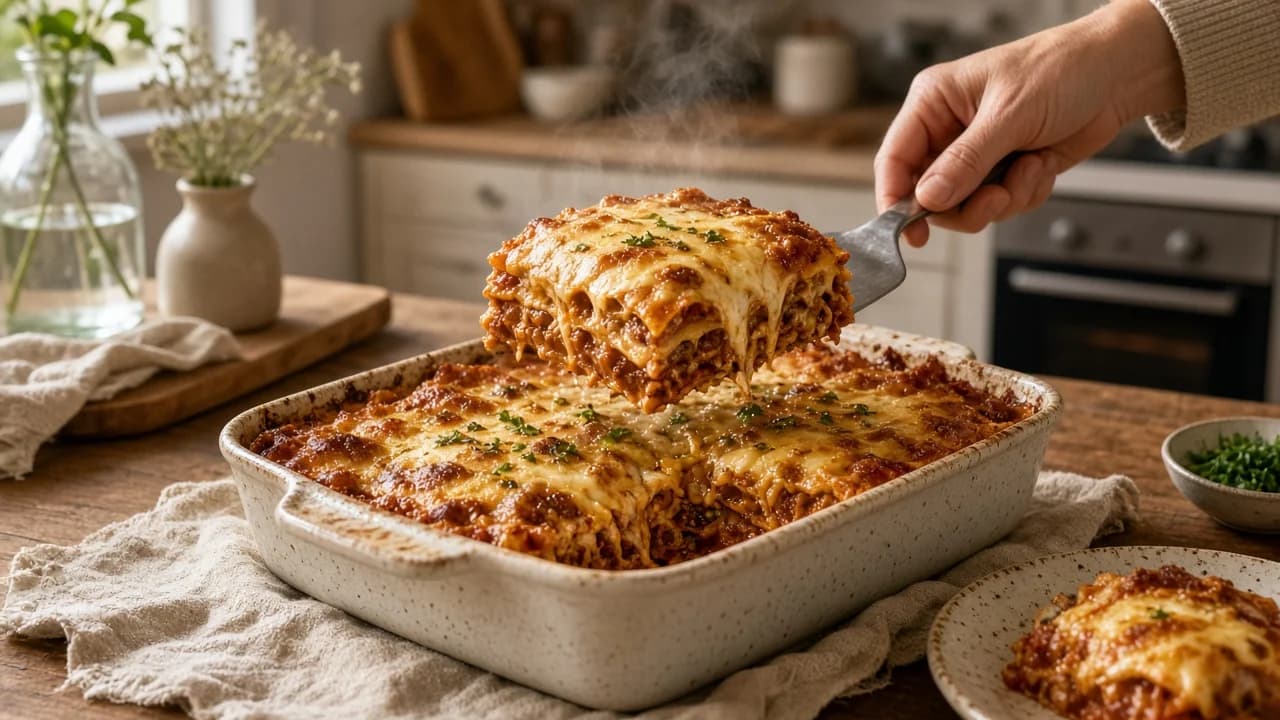
Make the sauce once. Let dinner use it twice — not as leftover inspiration, but as a working connection between what you already cooked and what you cook next.
Use It Up is how Carte treats a cooked component you already made as something the next meal can use — so a dish can become an ingredient, and shopping can focus on what is still missing.
The core idea
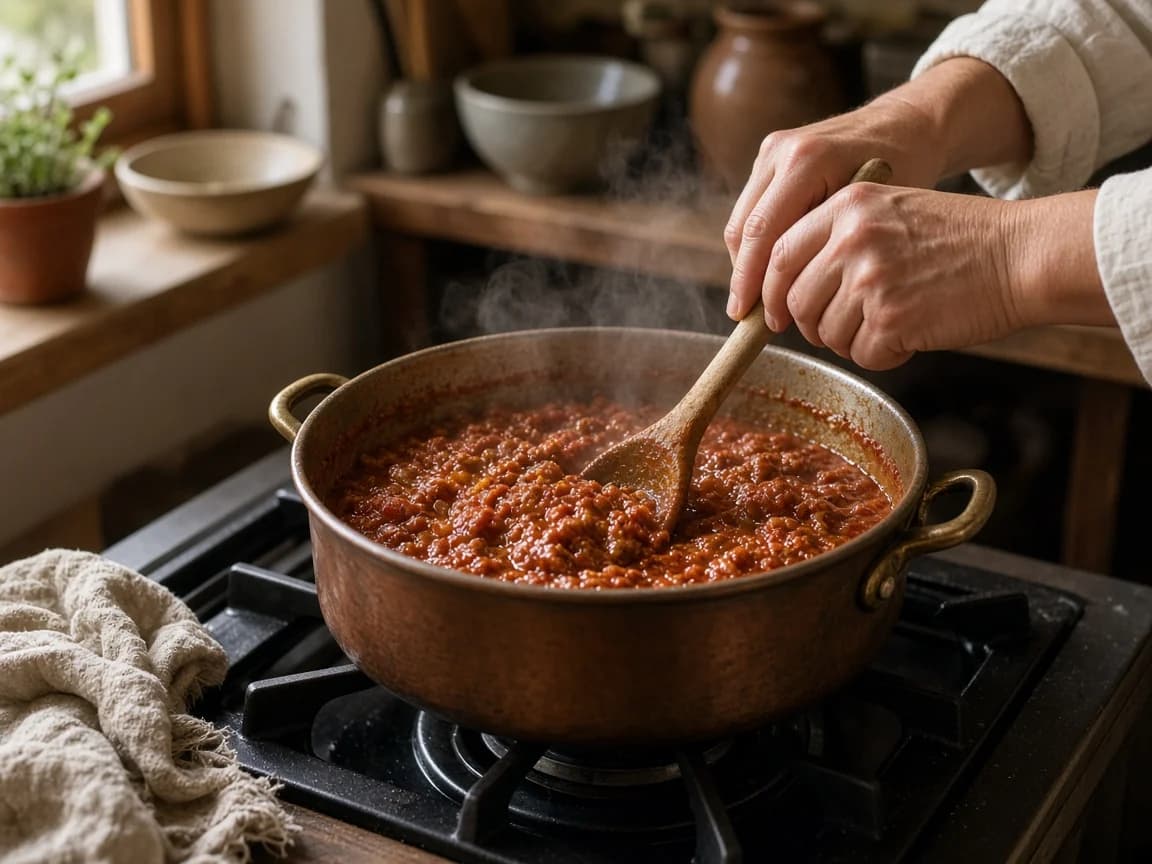
Ragù today can become part of lasagne later. That is not a leftover tip and not a fridge-scanning inventory. It is a working connection: cook a component once, keep what remains as a known provision, and let another saved dish use it.
Make the sauce once. Let dinner use it twice.
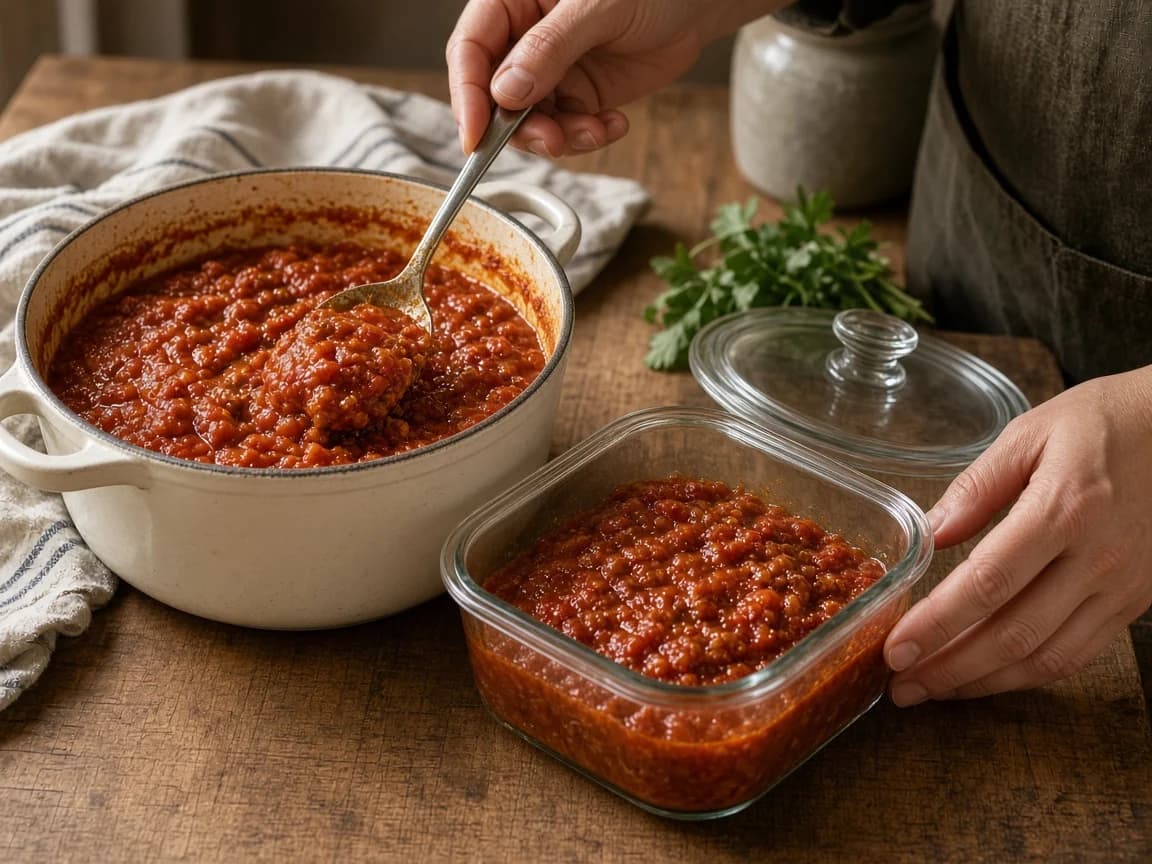
When a later saved dish needs a cooked component Carte is already tracking, that provision can satisfy that part of the recipe need so you are not starting the sauce from scratch.
Where enough of that component is already on hand as a tracked provision, shopping can focus on what the next dish still needs — not on remaking the part you already cooked.
From one pot to the next meal
Reuse example
Illustrative kitchen story
One consistent kitchen story for this page. The portion counts below are illustrative. The product idea they demonstrate — a cooked component kept in the larder and used by a later dish — is how Carte is designed to work.
Result
The cooked ragù already on hand can satisfy that component need.
Shopping can then focus on what the lasagne still needs — not on making the sauce again.
When a later saved dish uses a cooked component Carte is already tracking, that provision can cover that part of the recipe need. The shopping list can then focus on what is still missing — not on remaking the sauce you already have.
Why it matters
Batch cooking is more useful when the second dinner does not have to forget the first. Reusing a base you already cooked means less repeated prep, and less reason to buy that same cooked component again when Carte is already tracking enough of it.
That is a practical kitchen habit — not a promise of waste percentages, dollar savings, or food-safety guarantees.
Connected kitchen
Part of the same kitchen
This is why Use It Up belongs inside Carte rather than in a generic leftover recipe search. The component you keep is available to a later saved dish on the same standing menu, and the shopping list can account for what that dish still needs.
The recipe organizer is what makes the second dinner possible: if the sauce never left a photo album, the next meal starts from scratch.
Questions
Use It Up is Carte’s way of keeping known cooked components available so a dish you already made can become an ingredient in a later meal — and shopping can reflect what is still missing.
Carte can help with known cooked provisions and components it is tracking. It is not a system that knows every leftover scrap in the fridge.
Yes. Where another saved dish uses that cooked component, the component can satisfy that part of the recipe need.
Yes. When Carte is tracking enough of a cooked component to cover what a later dish needs, that part of the need can be covered so the list focuses on what is still required.
No. Carte does not maintain a complete real-time inventory of every raw ingredient in your kitchen.
No. Carte accounts for configured staples and supported cooked components it can reuse — not a full raw-ingredient pantry.
No. Carte does not claim expiry detection or food-safety guarantees. Use your own judgement about what is still good to cook.
Cook a component worth keeping — then let the next dinner use what is already ready.