Meal planning for two people

Meal planning for two that leaves room for real life.

Four or five dinners can be a useful place to start. Leave a little room for leftovers, a meal out, or a change of plan.

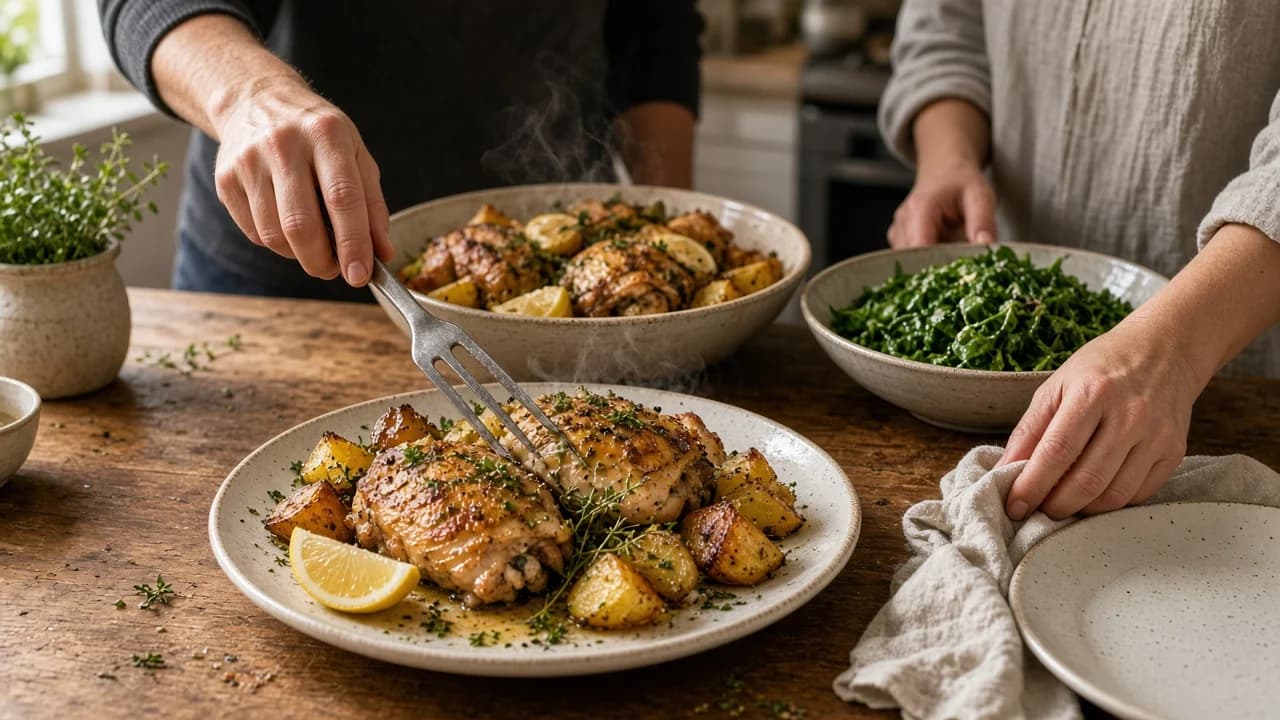
Two people serving lemon-roasted chicken, browned potatoes and greens at a wooden kitchen table, faces out of frame.
Dinner for two, still flexible: chicken, potatoes and greens being served, with a second plate waiting.

Start with a short menu you both enjoy, choose portions deliberately, leave space for leftovers or plans changing, and reuse a few ingredients across different dishes.

How do I meal plan for two people?

Keep a short list of dishes you both like, choose four or five dinners for the week, set portions before you shop, leave at least one night open, and reuse a few ingredients in different plates. You do not need a seven-day calendar, and you do not need software to start.

A method, not a timetable

The simplest meal-planning system for two

Meal planning for two people fails most often when it copies a family calendar: seven named dinners, written on Sunday, defended all week. Two adults rarely live that way. One of you works late. Someone is invited out. The roast makes a second plate without becoming a second identical dinner.

A simpler system is enough. Agree a short go-to menu. Plan four or five dinners, not seven. Size those dinners for two — or for two plus a plate you mean to hold. Leave space. Reuse a lemon, a bunch of greens, a cooked chicken, across dishes that do not look the same on the table.

That is meal planning for two adults: fewer decisions, not more rules. A meal planner for couples can later hold the menu and the list. The method still works on paper.

  1. A short menuWrite down the dishes you both actually like and will cook. That list is the plan.
  2. Four or five dinnersChoose what you intend to cook. Leave at least one night unassigned.
  3. Portions firstDecide how many plates before you write the shop, including any plate held for later.
  4. A few shared ingredientsLemons, greens, herbs, and a cooked piece can cross dishes without repeating the same plate.

What you both actually cook

Build a short go-to menu together

Start with dishes you already make. Ten is plenty. The point is a list you can read in a minute and recognise: lemon chicken, beans on toast, a grain bowl, salmon on a tray. If only one of you will cook a dish, keep it anyway — mark it as theirs — but do not fill the week with meals the other person will not eat.

Write favourites first. Then add one or two things that use leftovers or share ingredients with those favourites. A standing menu is not a personality test. It is a kitchen drawer of dinners you trust.

Sit down for ten minutes with a pen. Each of you names three dinners you are happy to cook or eat this month. If your tastes diverge, keep both people’s dishes on the list and rotate — you are not required to eat identical plates every night. Mark who usually cooks which dish so the week does not become a negotiation from scratch.

When the week starts, you are not inventing dinner. You are choosing from a list you already agreed.

Room in the week

Plan 4–5 meals, not seven fixed dinners

How many dinners should two people plan each week? Four or five is a useful default. That leaves nights for leftovers, for eating out, or for picking something else from the menu when the planned dish no longer fits.

Seven fixed nights look complete on a grid and then break. A two-person plan that names every evening has nowhere to put a late train or a leftover roast. Open space is part of the system, not a failure of it.

If you like cooking most nights, five planned dinners plus a fallback on the menu is still more honest than seven locked titles. You can always cook the fallback.

Count a leftover plate as a planned option when you already know it will be eaten. If Monday’s chicken becomes Wednesday’s bowls, Wednesday is still planned — you just do not buy a second protein. The open night is for eating out, the held plate, or the fallback. It is permission, not a gap in the system.

How many dinners should two people plan each week?

Four or five planned dinners is usually enough. Leave at least one night open for leftovers, eating out, or choosing something else from a short menu. Seven fixed nights is more structure than most two-person weeks need.

Two is a number

Size portions for two on purpose

How do I avoid buying too much food for two? Decide the plates first. Two portionsof the roast if you will both eat it tonight. Three if one plate will wait. Extra chicken only when Wednesday’s bowls need it. Then shop to that number.

How should recipes be scaled for two? Use the portion count you just chose. Halve a four-portion recipe when you want two dinners. Keep it at four when you are cooking a component for later. The arithmetic is the easy part; the decision is whether the extra food has a job.

A recipe scaler helps with grams and spoons. It does not decide whether you wanted leftovers. Taste still needs a look — salt, lemon, and pan size do not always halve cleanly — but you are no longer buying for a household you do not have.

How do I avoid buying too much food for two?

Set portions before you write the list, including any plate you will hold for later. Buy for those plates, not for a family-sized default. Overlap a few ingredients across dishes so the shop stays short.

How should recipes be scaled for two?

Scale to the number of portions you will actually eat, including any plate you intend to hold for later. Halve a four-portion recipe when you want two dinners, not when you want one dinner plus an undefined stash. A recipe scaler is useful for the arithmetic; taste and pan size still need a glance.

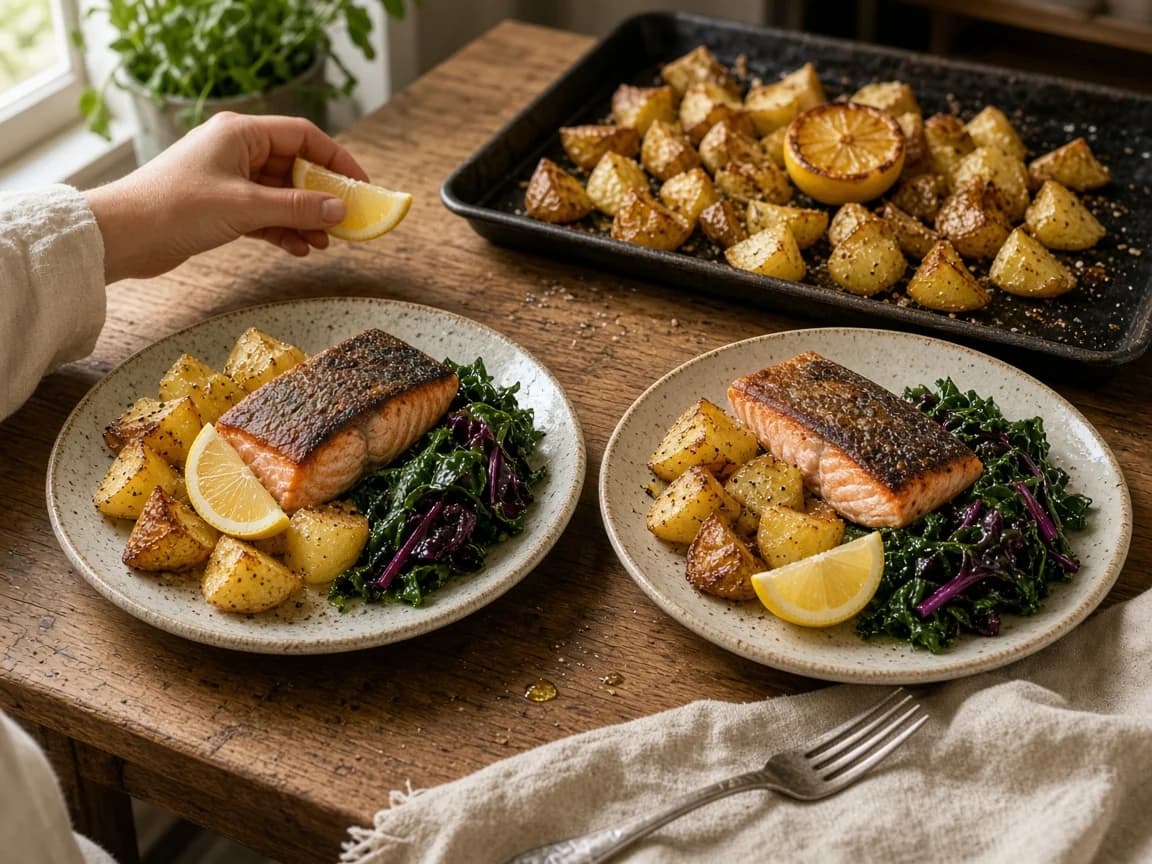
Two plates of sheet-pan salmon with crisp potatoes, lemon and greens, with the roasting tray still on the table.
Two plates of salmon on purpose, with the tray still in reach.

Familiar, not identical

Reuse ingredients without eating the same dinner twice

Two people do not need a new spice rack every night. They do need the second dinner to feel like a second dinner. Monday’s lemon-roasted chicken can become Wednesday’s herby grain bowl: same bird, different grain, more herbs, a different shape on the table.

Shared ingredients — lemons, greens, herbs, potatoes, onions, cooked chicken — are the overlap. The plates should not match. A tray of potatoes beside a roast is not the same meal as potatoes under salmon. Greens in a bowl are not greens on a dinner plate. That is reuse without repetition.

This is not a waste-reduction promise. It is a way to keep the shop small and the week interesting. If a cooked component will not be used, do not cook it. In Carte, supported prepared components can cover part of a later dish — see the recipe organizer reuse story.

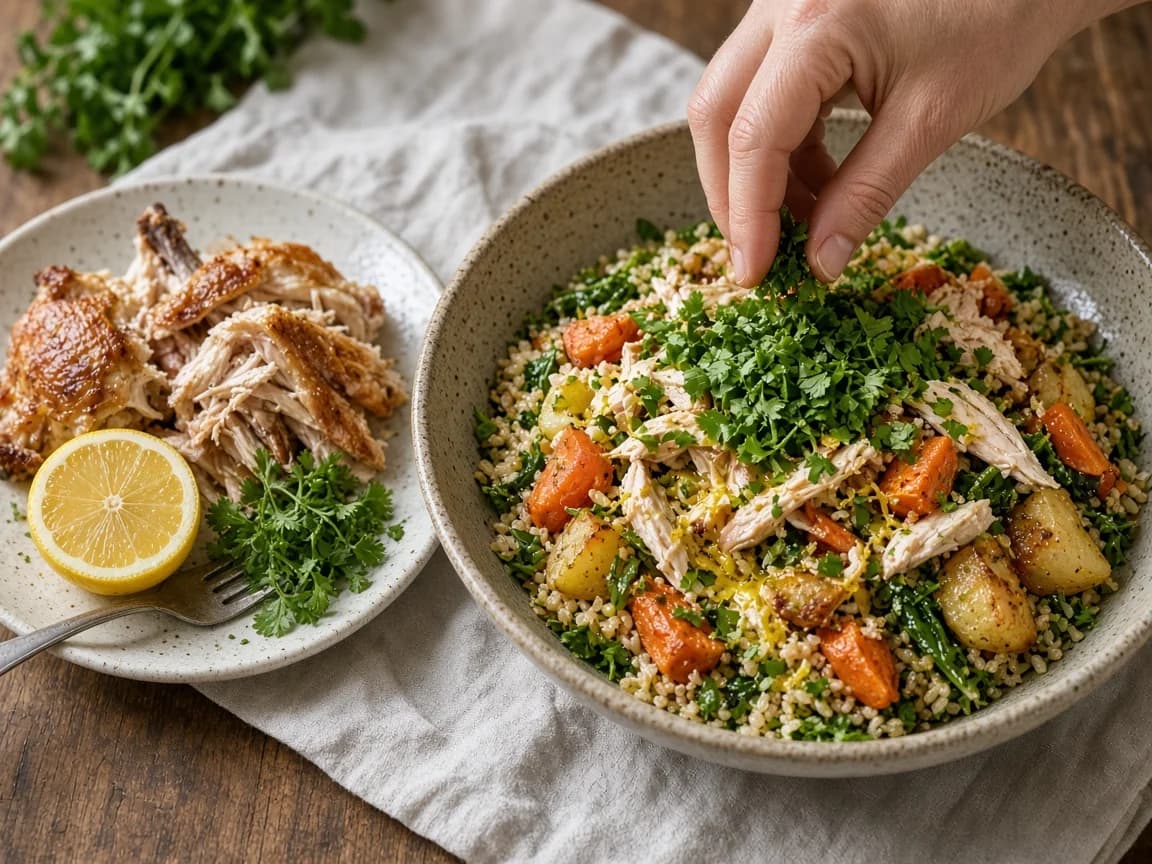
A herby chicken grain bowl with carrots, greens and lemon zest beside leftover roast chicken being pulled for a second dinner.
The roast becomes a bowl. Same chicken, a different dinner.

Shared ingredients, different finished dinners. This is an example of overlap — not a rule that you must cook chicken, beans, and salmon.

  • LemonsRoast chicken, grain bowls, sheet-pan salmon
  • GreensBeside the roast, in the bowls, with the salmon
  • HerbsOn the chicken, in the bowls, over the beans
  • PotatoesCrisp with the roast, then with the salmon
  • OnionsUnder the chicken, in the tomato-braised beans
  • Cooked chickenMonday roast, Wednesday grain bowls

Dinner can wait

What to do when your schedules are different

How do couples meal plan with different schedules? Plan the dish, not the hour you both sit down. Cook when the first person is hungry. Hold a plated portion, cover a dish, or leave the later person a meal from the same short menu. You do not have to eat at the same time for a two-person plan to be a plan.

A meal planning app for couples should not assume a shared 7 p.m. It should assumeone household: the same list of dishes, the same shop, the freedom to eat when you get in. If you do sit down together, the system still works. It just does not depend on it.

Keep one easy fallback on the menu for the night that collapses. Toast and beans, eggs, a bowl from leftovers. The fallback is part of planning, not a secret.

A practical sequence: the first person home cooks the planned dish, plates one serving, and covers the rest. The later person reheats or eats it as it is. If they will not want that dish, they pick another from the short menu and the held plate becomes an open-night leftover.

How do couples meal plan with different schedules?

Plan the dishes, not the hour you both sit down. Cook when the first person is home, hold a plated portion or a covered dish for the later person, or let them pick another meal from the same short menu. You do not have to eat at the same time for the plan to work.

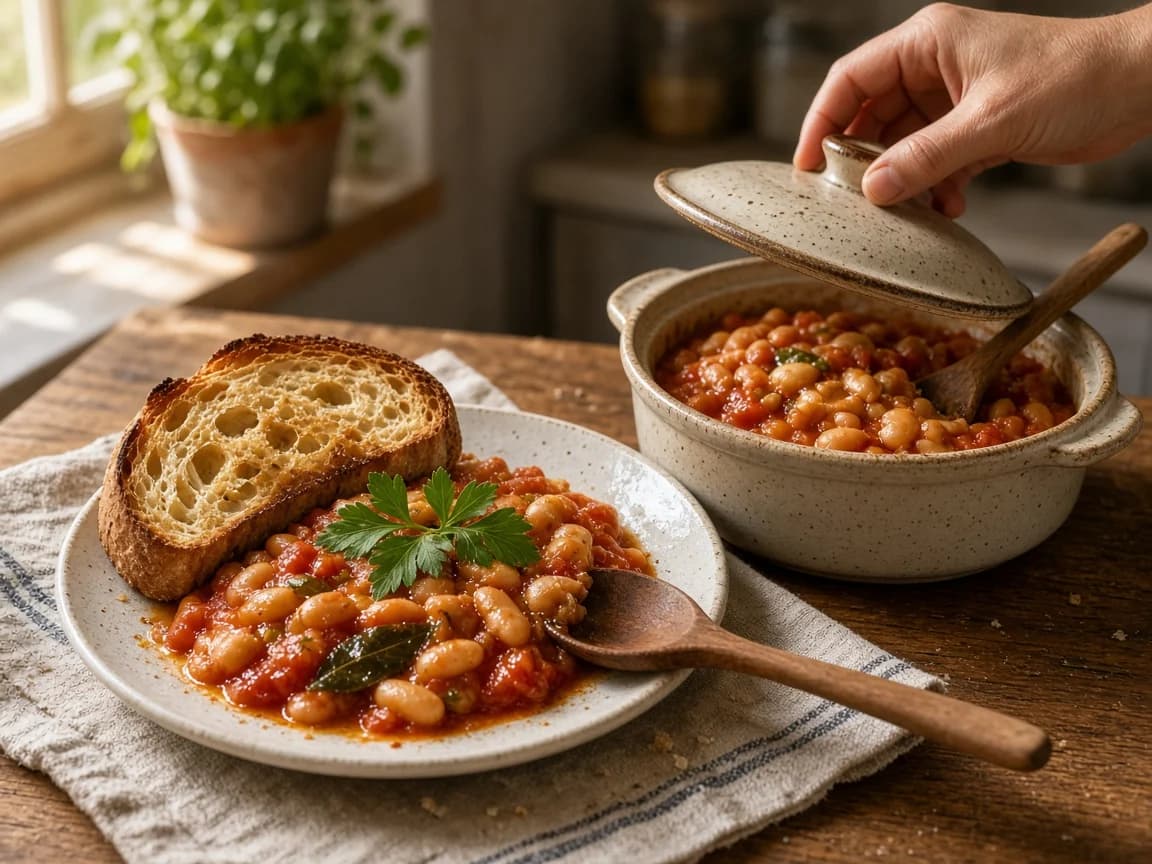
A bowl of tomato-braised white beans with toasted bread, and a second portion waiting in a lidded ceramic pot.
One bowl now. The rest waits in the pot.

An example, not a diet

Example flexible week for two

This week shows four planned dinners, ingredient overlap, and open space. It is an adaptable sketch, not a required diet. Swap the dishes for yours. Keep the shape: planned, open, overlapping, unplanned.

A sketch, not a prescription

Four dinners, and room around them

  1. Monday

    Planned

    Lemon-roasted chicken thighs, crisp potatoes and greens

    Cook extra chicken if Wednesday’s bowls will use it.

  2. Tuesday

    Open

    Open night — leftovers, eating out, or something from the standing menu

    The plan holds even if nobody cooks.

  3. Wednesday

    Planned

    Herby chicken grain bowls using remaining chicken and greens

    A different plate from Monday, not a repeat of the roast.

  4. Thursday

    Planned

    Tomato-braised white beans with toast

    Uses onions and herbs already in the kitchen.

  5. Friday

    Planned

    Sheet-pan salmon with lemon potatoes and greens

    Lemons, potatoes, and greens return in a new dish.

  6. Weekend

    Open

    One flexible cook and one unplanned night

    Choose when the week is real, not on Sunday evening.

Before you shop

Five-minute checklist

Run this before you shop. Print it if a paper list is easier in the kitchen.

  1. Choose four or five dinners
  2. Pick two reliable favourites
  3. Add one meal using overlapping ingredients
  4. Set portions before making the list
  5. Leave at least one night open
  6. Decide who is shopping
  7. Keep one easy fallback on the menu

When you want the method in software

How Carte automates the system

After the paper method is in place, a meal planning app for couples can hold the menu and the list. Carte does that for a single household. It is not the only method, and it does not require you to eat the same meal at the same hour.

Once you have a few dishes you both enjoy, keep them on your Carte menu. Choose portions when you plan to cook, and Carte combines the ingredients into one list. Staples you have marked as always on hand stay off it, and recorded cooked components can cover part of a later dish.

People in one household can work from the same menu and order where that behaviour is currently verified. That is Shared Kitchen: one kitchen, not live-sync claims across every device, and not a social graph. Cooking uses the same recipe you saved, at the household’s pace. Recipe organizer is the longer story of keeping those dishes; the meal planning app overview sits on the homepage. For a household with more than two people, see family meal planning.

What meal-planning app works for couples?

A meal planner for couples should keep a short shared menu, let you choose dishes without locking every night to a date, size portions before shopping, and produce one list. Carte is built that way for one household. It is not the only method, and it does not require you to eat the same meal at the same hour.

  1. Standing menuKeep the dishes you both enjoy in one place, ready when dinner is real.
  2. Choose, don’t schedulePick dishes without assigning every night to a calendar date.
  3. Portions firstSet how many plates before the shopping list is built.
  4. One listMatching ingredients from the chosen dishes combine into one shop.
  5. One householdWhere currently verified, people in the same kitchen work from the same menu and order.
  6. Cook at your paceInstructions stay with the recipe you chose, including a plate held for later.
  7. Use what you cookedA supported prepared component can cover part of a later dish and change the list.
Illustration of the method in Carte — not a product screenshot. Authenticated two-person screens are not on this page yet.

AI is optional. The standing menu, portions, list, and cooking loop work without it.

Questions

Frequently asked questions

How many dinners should two people plan each week?

Four or five planned dinners, with at least one night left open.

How do couples meal plan with different schedules?

Plan the dishes, not a shared hour. Hold a portion, or let the later person pick from the same short menu.

How do you avoid food waste when cooking for two?

Size portions before you shop and reuse ingredients across different dishes. That is a habit, not a waste-reduction guarantee.

How should recipes be scaled for two?

Scale to the portions you will eat, including any plate held for later. Check salt, lemon and pan size after the math.

What meals work well as planned leftovers or components?

Roasts, beans, grains and tray vegetables become later plates — a bowl, toast, or a different sauce — without repeating the same dinner.

What meal planner works for couples?

A short shared menu, dishes chosen without dates, portions before the list, and one shop. Carte is built that way for one household.

Keep a short menu. Leave a night open.

Four or five dinners, portions chosen on purpose, and enough space for the week you actually have.