
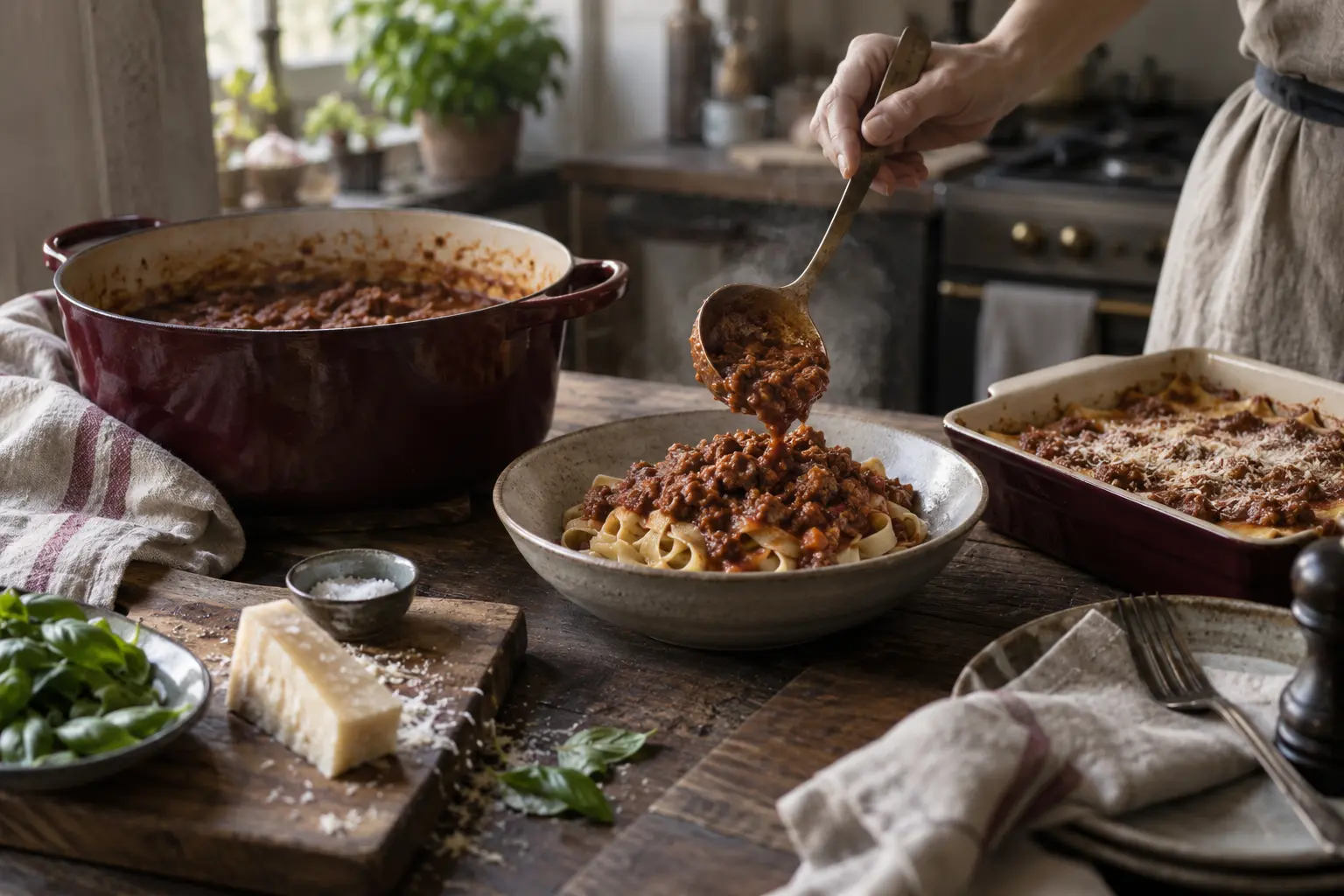
Batch cooking means making food ahead so a later meal needs less work. That can be a whole dish, but it can also be a sauce, cooked beans or vegetables that fit several different dinners. You do not have to spend Sunday filling identical containers to make it useful.
The helpful question is not “How much can I cook?” It is “What will this make easier next?” Start there, and the amount of cooking usually becomes much more manageable.
Choose the next meal before you make extra
Look at the dinners you genuinely want to eat. Pick one that has a useful part in common with another. A tomato sauce might go with pasta first and become part of baked eggs later. A tray of roasted vegetables might sit beside one dinner, then fill a sandwich or bowl. The second dish should already sound good to you.
Write down both uses before shopping. “Extra sauce” is vague. “Sauce for pasta, plus a container for baked eggs” gives the extra food a job. If you cannot name the next use, cook a smaller amount or choose something you are happy to freeze.
Build around a base, a fresh finish and a fallback
A useful batch does part of the work without deciding every detail. Keep the base fairly simple, then let the finishing ingredients change the meal. A lemon, a handful of herbs, crunchy greens or a different bread can make the same prepared part feel at home in a different dinner.
| Prepare | First use | Another use |
|---|---|---|
| A tomato sauce | Pasta with a little grated cheese | A base for baked eggs |
| Roasted vegetables | Alongside the main dish | A sandwich or grain bowl |
| Cooked beans | A warm, brothy supper | Mashed onto toast with a fresh topping |
These are meal combinations, not complete recipes. Follow the method and quantities in the recipes you choose. In particular, check that the second dish calls for a cooked component rather than a raw ingredient: they are not always interchangeable.
Count meals and portions before you shop
Think about who will eat each dinner and whether you want anything left afterward. A batch for two dinners for two people needs enough of the component for both recipes, not merely four vague scoops. Use the amounts in those recipes to work out the total.
- Write the component amount required by dinner one.
- Write the amount required by dinner two.
- Add them together in the same unit.
- Compare that total with the recipe’s stated cooked yield.
- Include the finishing ingredients for each dinner on the shopping list.
If a recipe gives its yield in portions but the next dish calls for grams, weigh the cooked batch and measure out what the next recipe needs. Do not assume a cup, a portion and a ladle all describe the same amount. Our recipe scaler shows portion math; it does not decide cooking times or pan sizes for you.
Give the cooking session a clear finish
Before you start, make room for the containers you will use. Read the recipes, set out the equipment and decide which task takes longest. You might start the sauce, prepare the vegetables while it simmers, and wash the board before moving to anything ready to eat.
Once the food is cooked, separate the amount reserved for the next meal rather than leaving that decision until you are hungry. Label the container with what it holds, when you cooked it and the next dish you intend to make. “Tomato sauce — baked eggs” is more useful than a mystery tub.
Make storage part of the plan
Perishable food needs prompt chilling. FoodSafety.gov advises refrigerating it within two hours, or one hour above 90°F (32°C). Divide leftovers into shallow containers rather than leaving a large pot to cool on the counter. Keep the refrigerator at 40°F (4°C) or below. See the official chilling guidance.
Storage times depend on the food. The official cold-storage chart lists three to four refrigerated days for soups, stews and cooked meat or poultry leftovers. Freeze suitable portions if your plan puts them beyond the recommended window. A planned second meal does not extend the storage time of the original batch.
If the schedule changes, change the storage plan too. A component intended for much later in the week may belong in the freezer, not at the back of the fridge. Check food-specific instructions for thawing and reheating. An app can record a cooked component; it cannot tell whether that food is safe.
Make it work in a small kitchen
You do not need three pans and a clear afternoon. Make extra of one useful part while cooking a normal dinner. Choose a second meal that needs little additional equipment. If fridge or freezer space is tight, that space is a limit worth planning around, not a problem to solve after the food is cooked.
- One component you already know how to cook.
- Two dinners you actually want.
- Enough room to chill and store the reserved portion.
- A clear label and a realistic next-use date.
- One easy alternative if neither dinner sounds right.
Let the list follow the meals
In Carte, the dishes and portions you choose create one shopping list. When a cooked component is recorded and connected to a later recipe, the list can account for it. That is the useful connection: a sauce you already made becomes part of the next dinner, and shopping focuses on the rest.
Keep the habit simple enough to repeat. If one prepared part makes a busy evening easier, the batch has done its job. You can still decide which dinner sounds good when that evening arrives.